Orthopedic Medical Billing Services for Surgeons and ASCs

Orthopedic medical billing requires accurate coding, modifier management, global period tracking, implant documentation, and workers’ compensation expertise. MedCare MSO combines AAPC-certified coders and AI-powered workflows to validate claims before submission.

Providing Orthopedic Medical Billing Services That Get Results

Orthopedic care has completely changed due to advances in the specialty. Starting from joint replacement to outpatient spine surgery, treatments have improved, but at the same time, complexity has increased for the medical billers. Outsourcing to experienced orthopedic billing experts has proven to increase revenue and reduce the administrative strain these high-dollar surgical claims create.


96%

Collection Ratio


98.5%

First Pass Clean Claims Rate


Up to 35%

Revenue Increase


35%

Reduction in A/R

Orthopedic Expertise Backed by Full-Scope Billing Support

MedCare MSO provides your practice with end-to-end orthopedic billing services covering the coding, billing, denial management, and A/R follow-up. Our team provides billing support for arthroplasty, fracture care, spine procedures, arthroscopy, and complex orthopedic surgical workflows.

Orthopedic billing encompasses various complex procedures, implant handling, guidelines for multiple procedures, rules on global surgery, accuracy in laterality, and workers’ compensation claims. We solve problems that arise as a result of various coding requirements and national rules, thus helping orthopedic clinics prevent refusal of payments, facilitate cash flow, and improve financial results. Such unique competence is what differentiates orthopedic billing companies from regular providers.

Talk to an Expert
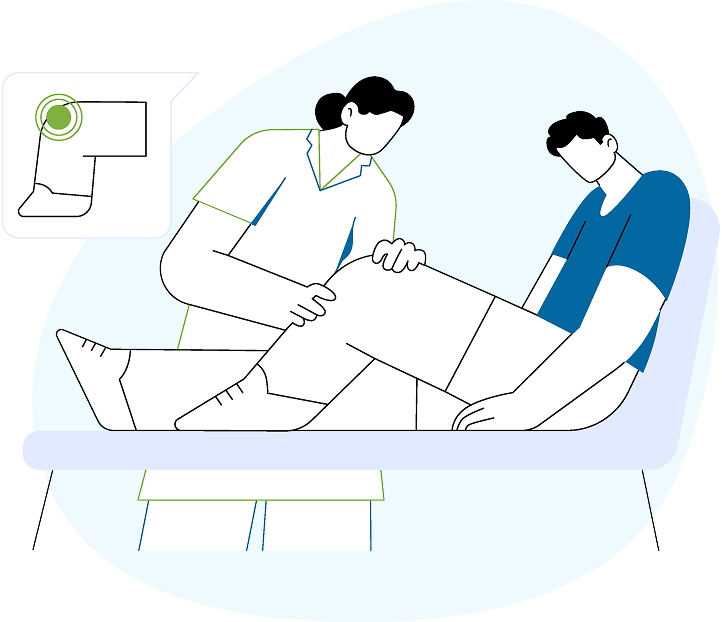
Reimbursement Challenges Unique to Orthopedic Surgery Billing

Orthopedic surgery billing includes some unique elements, such as implant-related issues, modifiers, global period information, laterality accuracy, and workers compensation regulations. Our orthopedic medical billing services assure that these elements are taken into account, which is why generalists miss what specialists notice.

Implants and Global Periods Decide the Margin

Orthopedic surgical procedures include using joint implants, spinal implantations, and bone grafting types that abide by rules that vary according to the insurance carrier and respective contracts. Incorrect reporting of the orthopedic implants may cause delays in payments, reductions of claims or even denials. We maintain proper documentation, bills, and tracking of the products as required by each specific case.

Global period billing works in a similar way. Fracture care revolves around a 90-day window, while minor procedures are worked around 0 to 10 days, and each window decides which follow-up is bundled. We date every procedure by surgeon and attach modifier 24, 58, 78, or 79 to the encounter that earns it.


Modifiers and Sequencing Set What You Are Paid

Orthopedic practices often lose reimbursement due to incorrect bilateral procedure billing. Modifier 50 and lateral modifiers such as RT and LT should not be confused with one another among the payers as their wrong usage may lead to denial or overpayment and thus a possible audit process. We know how to apply the right modifier depending on the payer.

Sequencing is just as important. Under the multiple procedure payment reduction, under MPPR, Medicare pays the highest-valued procedure at 100% and applies a 50% reduction to each additional procedure. The procedures are ranked by their relative value, and modifier 51 is only used where required taking into account that add-on codes are excluded from this procedure.

Book a Free Consultation

Documentation, Authorization, and Workers Compensation

Different CPT codes are involved in arthroscopic and open methods. Any confusion about surgical documents can eventually lead coders to pick the wrong one. In order to achieve accuracy, our orthopedic coders examine the medical record and ask the doctor questions rather than making assumptions. Both modifier 22 and claims for expensive implants rely on such documentation.

Workers' compensation billing adds its own demands: state-specific fee schedules, authorization workflows, and utilization review compliance. We handle workers' comp across all 50 states and manage the longer billing cycles these claims involve, and the same advance-authorization rules apply to many orthopedic surgeries performed in ASCs. Practices that would rather not carry this in-house can outsource medical billing services to a team that manages orthopedic documentation, authorizations, and workers' comp end to end.

Audit Risk and Orthopedic Coding Compliance

High-value orthopedic claims, including joint replacements and spinal fusions, require detailed documentation to pass payer audits. The highest priority in payer audits is given to joint replacements and multi-level spinal fusions. The completeness of operative notes and documentation of implants is checked first.

Out-of-network orthopedic services also have to comply with the No Surprises Act. Rather than waiting for a payer to request records, we assemble audit-ready claim packages as each claim is built, so orthopedic coding compliance becomes a matter of producing proof on demand instead of hoping a claim holds up. When you outsource medical billing services to our orthopedic team, that audit-ready discipline is applied to every claim from the start.

Protect My Revenue

Orthopedic Billing and Coding Services We Provide

Our services for orthopedic billing span the entire revenue cycle, starting from orthopedic billing and coding to the A/R follow-up. Our expertise stops errors that general experts would miss, automation catches things that mass processing may overlook, and our company combines both aspects to uncover potential problems before they cause any trouble during the denial stage.

Coding and Documentation

Orthopedic CPT Coding

Orthopedic coding takes into consideration joint and spinal procedures and injuries, as well as the specific codes related to them, according to the operative report.

ICD-10 Diagnosis Coding

Knee osteoarthritis (M17.x), femoral neck fractures (S72.x), lumbar disc disorders (M51.x), and rotator cuff tears (M75.x), coded with laterality and severity.

Modifier Validation

Layered review of RT, LT, 50, 51, 59, 22, 57, 62, 78, and 79 against NCCI edits and each payer's own policy.

Global Period Management

Every 0, 10, and 90 day window tracked by surgeon and procedure, separating bundled follow up from billable complications.

Eligibility and Benefits Verification

Prior to the procedure, it is also important to verify coverage, implant fees, and network affiliation to avoid any issues with the claim.

Prior Authorization Management

The full authorization lifecycle has to be in order when submitting cases dealing with joints, spine, and arthroscopy so that the decision process of CMS-0057-F does not have to deal with unnecessary matters.

Charge Entry and Claims Submission

All the claims have to be submitted electronically with a proper charge. The audit check of the modifiers and NCCI requirements has to be done prior to sending the claim.

Payment Posting and AR Follow-Up

Remittances that have been reconciled based on contracted rates followed by aging accounts sorted by value, payer, and buckets keep on facilitating the movement of high-value surgeries.

Implant and Device Billing

Implementation of necessary documentation, invoices, and tracking of devices is done through both the implantable hardware device and the manufacturer's requirements.

DME and Orthotic Billing

Braces, splints, and orthotics are covered by implementing HCPCS L code  billing, supplemented by verification and authorization of medical necessity.

Workers Compensation Orthopedic Billing

State-specific workflows across all 50 states covering fee schedules, utilization review, treatment plans, and authorization tracking.

Denial Management and Audit Defense

Appeals are retrieved on a case-by-case basis, resolving the issue at the core where necessary, taking into consideration both documentation and modifier discrepancies and bundling.

Get a Free Billing Review

Who We Serve


Hospital Orthopedic Departments


Ambulatory Surgery Centers (ASCs)


Orthopedic Surgeons (MD/DO)


Sports Medicine & Musculoskeletal Practices

Orthopedic Billing Workflows Built for Surgical Complexity

Each orthopedic subspecialty requires specific coding guidelines, documentation standards, and payer requirements. Billing differs meaningfully across orthopedic subspecialties, so each requires its own coding and documentation approach rather than a single consolidated process.


Joint Replacement Billing

Joint replacement billing involves total knee arthroplasty (CPT 27447) and total hip arthroplasty (CPT 27130), as well as billing for component parts, client documentation, and revision codes that are needed for these types of cases.

Spine Surgery Billing

Spine surgery billing based on different approaches with coding according to cervical, thoracic, and lumbar fusions, with codes CPT 22551 and 22612 and with related additional codes, in addition to completing coding for instrumentation and biologics.

Arthroscopy Billing

Arthroscopy billing that selects the primary CPT code based on the type of joint, thus including debridement, meniscectomy, chondroplasty, and labral repairs as well as rotator cuff procedures.

Fracture Care Billing

Fracture care billing for both closed and open procedures, applying the global period and correctly encoding all information related to casting and splinting and traumatic cases.

Sports Medicine and Musculoskeletal Billing

Musculoskeletal billing procedures are based on the offered services instead of being generalized into one billing category through the use of evaluation and management codes.

ASC Orthopedic Billing

ASC orthopedic billing methods accurately identify the exact point of service and are responsible for identifying the professional and facility related to the service offered.

Hand, Foot, and Ankle Surgery

Surgery of the extremities involves ensuring that appropriate laterality on each claim and the right open versus arthroscopic code are used to determine if the service is paid or denied.

Podiatry and Orthotics

Billing for the HCPCS L codes consists of braces and other fitting devices as part of the documentation of medical necessity and to ensure coverage is granted.

Hospital Orthopedic Departments

High-volume hospital-based orthopedics that are billed with accuracy for both facility and professional components among the many surgeons and payers for each contract.

Improve Orthopedic Claim Denials From Affecting Your Practice Growth

See how our orthopedic billing experts identify reimbursement gaps, improve claim accuracy, and optimize your revenue cycle performance.

We Are Certified by:

ASRM Certified Medical Billing Company NILA certified medical billing company HIPPA Compliant Medical Billing Company ISO certified medical billing company BBB compliance certification AAPC certified medical billing company

An AI Ecosystem Built for Orthopedic Revenue

Orthopedic claims, for example, a joint replacement claim alone, go through several processes between the operative note and the payment. Our four-layer AI-driven approach helps effectively patch the gaps where orthopedic revenue often leaks and four connected products run on top of it. Take the whole AI Ecosystem or wire a single piece into the EHR you already run.

AI-Powered Technology Behind Our Products

Four connected layers sit under every product, and it is this stack that turns a complex orthopedic claim into a clean one before a payer ever sees it.

API Integration

Transfers claim, eligibility, and payment data from your system without having to manually enter any information.

Reporting Process Automation

Monitors claim status and payer activity to identify orthopedic denial patterns before the end of the month.

AI Rule Engine

Uses orthopedic-specific edits, NCCI bundling, and global period logic to process the claim.

AI Automation

Carries out coding assistance, denial procedures, and follow-up in connection with claim volume.

Explore the AI Suite

Why Choose MedCare MSO Orthopedic Billing Company?

Hire Expert Orthopedic Billing Consultant

What Our Clients Say About Working With Us

Frequently Asked Questions

How to choose the best orthopedic medical billing service for a small clinic?

When selecting the best orthopedic billing service, it is advised to look for AAPC certified coders who have experience in global billing, implant billing, and modifier 50 billing. Ensure to find out their level of transparency, especially the service charge they impose when providing the service as well as their history of clean claims submission. A good orthopedic billing service provider offers the service to small institutions and does not offer substandard service.

The cost to outsource orthopedic billing services depends on various factors like the number of claims submitted and the nature of services. It means that there is no flat rate given since most orthopedic facilities prefer paying a percentage of the amount received. Schedule a call with our representative to negotiate the price.

Absolutely. We offer orthopedic billing and coding services as well, including provider credentialing and payer enrollment for surgeons, PAs, and NPs in the area of orthopedic billing involving commercial insurance, Medicare, Medicaid, and Workers' Compensation. The importance of updated credentials cannot be overstated as failure to do so may lead to issues with regard to claims denial and delays.

Our team maps out your workflow, connects to your systems, and runs a parallel period while your claims are still being processed. This ensures that everything runs smoothly. We also reconcile scheduled procedures with charges during the process so that no revenue is lost.

We work with top orthopedic EHR, EMR, and practice management systems so that we can work inside your existing system rather than forcing a change.That keeps your clinical workflow intact while our orthopedic billing and coding services handle charge capture, claims, and denials behind it.

Increase your Practice Revenue by up to 30% With Medcare MSO

1 Step 1
Let’s Get in Touch

If you’d like to talk to someone now, give us a call at 800-640-6409. ​
To request a call back, just fill out this form. Please let us know your interest so we can be sure to have the best person call you.

reCaptcha v3
keyboard_arrow_leftPrevious
Nextkeyboard_arrow_right