Revenue cycle management (RCM) is the financial process healthcare organizations use to track patient care from registration and scheduling through to final payment. Done well, it keeps claims clean, denials low, and cash flow predictable, which is why it directly determines the financial stability of any practice or hospital.
As regulatory requirements and payer rules continue to shift, organizations must master the core complexities of healthcare RCM. Proactive revenue cycle management optimization is key in improving patient care, securing timely reimbursements, boosting administrative efficiency, and maintaining financial health. This guide breaks down the essential stages of RCM, the challenges most likely to drain revenue in 2026, and proven revenue cycle management best practices.
What is Revenue Cycle Management?
Revenue cycle management (RCM) is the comprehensive financial process healthcare organizations use to track patient care episodes from initial registration and appointment scheduling to final zero-balance resolution. It includes administrative and clinical functions that contribute to the capture, management and collection of service revenue. RCM not only ensures a smooth workflow but also influences the profitability and financial viability of healthcare providers, regardless of practice size or specialty.
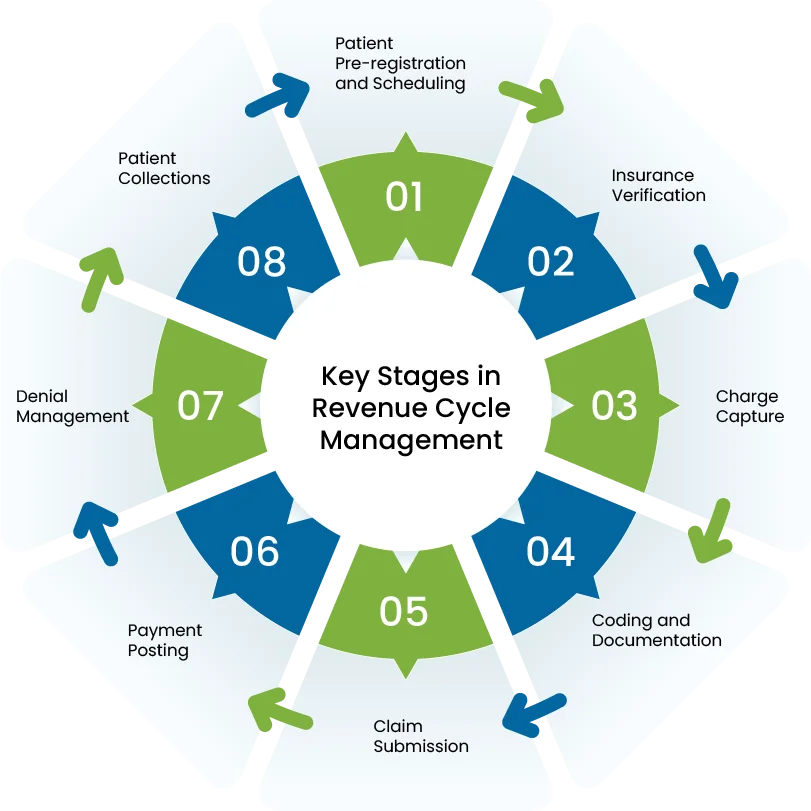
The revenue cycle management process involves eight sequential stages: patient pre-registration and scheduling, insurance verification, charge capture, medical coding, claim submission, payment posting, denial management and patient collections. Executing each of these steps with precision is critical to minimizing errors, preventing delayed payments and optimizing revenue cycle reimbursement.
Key Stages in Revenue Cycle Management
The RCM process is multifaceted and each stage plays a pivotal role in ensuring proper reimbursement for the services rendered. Here’s a detailed breakdown of the eight essential stages of revenue cycle management (RCM):
Patient Pre-registration and Scheduling
The revenue cycle management process actually begins before a patient ever sets foot in the healthcare facility. During the pre-registration and appointment scheduling phase, healthcare staff collect accurate patient demographics and thorough insurance details. Ensuring accurate data capture at the start is a foundational revenue cycle management best practice as it can affect billing accuracy later in the process.
For example, a medical practice or hospital might face massive billing roadblocks if insurance policy numbers are mistyped or patient demographic records contain discrepancies. These early-stage mistakes can lead to claim rejections, denials and disruptions across the entire revenue cycle.
Insurance Verification
Insurance verification is one of the most critical components of any successful revenue cycle management process. Healthcare RCM services must verify active patient insurance eligibility and coverage scope prior to rendering services. Failing to do so commonly results in claim rejections, which are costly and time-consuming.
Many healthcare practices and facilities still rely on outdated manual insurance verification methods which heightens the risk of errors. Implementing revenue cycle management optimization tools such as Electronic Data Interchange (EDI) and integrated practice software systems can help streamline the process by checking insurance eligibility, verifying prior authorizations and ensuring cleaner claims are submitted with accurate payer information.
Charge Capture
Charge capture is the foundational revenue cycle management process of recording clinical services rendered to a patient and translating them into billable charges. Accurate charge capture is critical for ensuring that a provider is reimbursed for every recorded procedure, medication, test and other services that the patient received.
One of the most significant challenges in charge capture is undercharging or missed charges, which occur when certain services are not documented properly. This can result in revenue loss for the healthcare provider. Implementing automated charge capture tools can eliminate manual tracking gaps and missed charges while maximizing overall billing accuracy.
Coding and Documentation
The next revenue cycle management process step involves coding and documenting diagnoses and procedures performed during the patient’s visit. This is essential for ensuring that providers are paid accurately and in compliance with government regulations, including the Affordable Care Act (ACA) and to avoid penalties.
Incorrectly coding a procedure or diagnosis can lead to improper reimbursement or an audit, coding errors triggered roughly a quarter of at-risk payer audit findings in 2025. The complexity of coding regulations makes it essential for healthcare providers to have certified medical coders and an updated coding system. Automated coding solutions help reduce errors and streamline this process.
Claim Submission
After coding, healthcare providers submit claims to insurance companies for reimbursement. This submission process requires accuracy and strict compliance with payer requirements to prevent denials or delays.
A claim submission is a delicate balance between providing enough detail and adhering to payer rules. Insurance companies often require specific documentation such as procedure notes or patient medical histories which must be submitted along with the claim within a specific timeline.
Healthcare providers can increase the likelihood of claims being processed and paid on time by integrating their RCM systems with payer networks, ensuring that claims are transmitted electronically and are in the correct format.
Payment Posting
After insurers process claims, they issue payments that must be recorded by healthcare organizations. Payment posting matches received funds with submitted claims.
Providers often face challenges when payments misalign with expectations, causing discrepancies requiring follow-up. Payment posting errors can result from miscommunication between payers and providers such as incorrect payment amounts or delays in processing.
Implementing advanced software can help minimize discrepancies and ensure payments are processed smoothly.
Denial Management
Denial management is a key area of focus for healthcare organizations. When claims are denied, providers must investigate reasons for denial, correct errors and resubmit the claim for payment. Each denied claim costs an estimated $25 to $118 to rework, delaying payment and directly impacting cash flow.
A well-designed denial management strategy includes tracking denial reasons, spotting trends and fixing root causes of denials. Analyzing denials helps healthcare providers develop strategies to prevent future denials by improving coding accuracy, streamlining claims and enforcing payer-specific compliance.
Patient Collections
Patient collections are vital within the revenue cycle management process. As patients are responsible for a larger portion of healthcare costs through high-deductible plans and co-pays, healthcare providers must ensure timely collections.
This process involves reaching out to patients to manage outstanding balances through clear communication, empathy and offering flexible payment plans
Additionally, utilizing technology like patient portals and automated reminders streamlines collections, making it convenient for patients to pay their bills.
What Is the Overall Goal of RCM?
The goal of the revenue cycle management process is to ensure accurate revenue capture by identifying deficiencies and correcting them. Efficient RCM also helps organizations address compliance issues like fraud, waste and abuse. For example, consider a situation where unnecessary tests or procedures are being ordered for patients. This could happen due to a lack of oversight or due to billing practices that encourage overutilization of services. These unnecessary tests can lead to inflated healthcare costs, overbilling and potential legal violations.
Benefits of An Effective Revenue Cycle Management
Below, we have mentioned the top 7 benefits of having an optimized revenue cycle:
- Streamlining Communication and Data Management: RCM connects patient accounts and clinical care by aligning insurance details and treatment records. This connection improves efficiency and reduces errors ensuring smoother billing and collection cycles.
- Improving Billing and Collection Processes: A strong RCM system streamlines appointment scheduling, patient pre-registration, payment collection and claims processing. It reduces administrative work, leading to faster reimbursements and fewer errors.
- Reducing Denied Claims: RCM systems gather all necessary data for claims processing, helping prevent the need for claims to be revised or resubmitted. This reduces the number of denied claims, saving both time and money.
- Enhancing the Patient Experience: RCM helps improve the patient experience by ensuring transparency in billing. Verifying insurance eligibility upfront allows patients to know about any balances or financial expectations early on.
- Better Financial Management and Reporting: RCM systems allow patients to pay bills online and enable healthcare providers to manage and store billing records securely, improving financial management and reporting.
- Supporting Compliance and Documentation: RCM ensures that proper documentation supports charges based on medical necessity. This improves patient safety by allowing clinicians to review clear, accurate records leading to better care.
- Analyzing Performance and Outcomes: RCM systems provide data for analyzing revenue cycle performance through the KPI dashboard. Healthcare providers can monitor processes, identify issues and make adjustments to improve efficiency. This helps keep the revenue cycle optimized over time.
Common Challenges Healthcare Providers Face in RCM
The most common revenue cycle management challenges are claim denials, coding errors, compliance risk, credentialing delays, manual workflows, shifting payer rules, rising patient financial responsibility and staffing gaps, and most of them are preventable at the front end.
Coding and Billing Accuracy
Precise coding and billing are vital for smooth cash flow within the RCM process. Medical coding involves extracting billable information while billing converts those codes into claims. Errors in these areas are a leading cause of denials with the majority of providers now saying at least one in ten of their claims is denied.
Compliance Standards
The healthcare RCM process must meet multiple compliance requirements to prevent fraud, waste and abuse. This includes safeguarding patient data under HIPAA regulations, maintaining coding accuracy, conducting audits and ensuring proper electronic claim submissions. Non-compliance can result in hefty fines and penalties potentially exceeding $1 million.
Credentialing Providers
Provider credentialing is necessary for reimbursement within the revenue cycle management process. This involves verifying provider qualifications like board certifications and submitting documentation to payers. Incomplete credentialing can delay or deny reimbursements, harming the practice’s financial health.
Data Analytics
Many practices lack visibility into where revenue is leaking because billing data sits in disconnected reports. Without analytics on claim denials, charges and reimbursements, organizations cannot address inefficiencies, improve billing accuracy or enhance overall revenue cycle performance.
Manual, Paper-Based and Disconnected Workflows
The use of paper charts complicates the RCM process because they are not integrated with EHRs which can lead to incomplete patient information for coders and auditors. This hinders accurate billing and care coordination, impacting both the quality of patient care and financial performance.
Rising Patient Financial Responsibility
As patients are taking on more of their healthcare costs, managing collections becomes more challenging. Half of revenue cycle leaders say they are very or extremely concerned about patients’ ability to pay, which is why flexible payment plans and early financial conversations are now essential to securing timely payments.
Regulatory and Payer Policy Changes
Healthcare organizations must deal with a wide range of payer rules, each with specific requirements that can vary. This makes it difficult to maintain accuracy and consistency in billing and claim submissions.
Staffing Shortages and Training Gaps
Finding qualified medical coders and billers who know the latest regulations is a constant struggle. Continuous training is needed to keep staff knowledgeable about evolving coding standards, payer requirements and billing guidelines.
How to Improve Revenue Cycle Management in a Medical Practice or Clinic
Improving revenue cycle management in a medical practice starts at the front end: most denials trace back to errors in registration, eligibility and authorization made long before a claim is ever submitted. By identifying strengths and areas that need improvement, practices can streamline operations and enhance overall efficiency. Data analytics can provide specific insights to guide decision-making and pinpoint where changes are most needed. Below are key areas to focus on for improving revenue cycle management.
The Importance of a Qualified RCM Manager
Successful RCM depends on the understanding that all steps of the cycle are interconnected. A problem in one stage can cause a ripple effect impacting other processes. Therefore, having a qualified RCM manager or director is crucial. This professional should be proficient in medical billing, able to communicate effectively with clinicians and other staff and maintain a well-organized operation. They play an essential role in unifying front and back-end operations ensuring smooth workflow across all stages.
Front-end processes typically involve patient interaction, such as registration, eligibility verification and pre-authorization while back-end processes cover administrative functions like claims management, denials and collections. The coordination between these functions is essential for the efficiency of revenue cycle management.
Tired of RCM bottlenecks and revenue loss?
Optimizing Front-End Processes
Efficient front-end processes establish the foundation for a smooth back-end workflow. Here are some critical areas that directly impact RCM:
- Accurate Patient Information: Billing starts with proper scheduling and registration. A pattern we see constantly in small practices: patient information such as a name, address or insurance detail entered incorrectly at the front desk triggers denials from insurers weeks later. Accurate demographic information is crucial to avoid unnecessary complications.
- Eligibility Verification: Verifying patient eligibility before each visit ensures that the patient’s coverage aligns with the payer and plan details provided. This step reduces the risk of denials and ensures services are covered.
- Prior Authorization Management: Managing prior authorizations is key to revenue cycle efficiency. Certain healthcare services or medications require approval from the insurer before they are provided and without this approval, practices may lose revenue.
- Provider Involvement in Peer-to-Peer Reviews: Involving providers in peer-to-peer reviews with insurance companies can help secure reimbursement. These reviews clarify why a particular service is needed which can lead to the approval of a prior authorization. Effective communication between the clinical and business teams is essential to ensure this process runs smoothly.
- Clinical and Billing Coordination: Clear communication between clinical and billing teams is necessary to avoid discrepancies. Proper documentation and alignment between clinical records and patient accounts ensure that all information is accurate and consistent.
Revenue Cycle Management Best Practices
In addition to optimizing front-end processes, there are several other actions clinics and practices can take to enhance RCM performance:
- Stay Current with Guidelines and Codes: Keeping up to date with medical code changes is critical. Using outdated or incorrect codes can result in claim rejections and delays in payment. Regularly updating coding practices ensures smoother claims processing.
- Implement Charge and Coding Edits: Introducing edits for charges and coding helps catch errors early. This includes checking for missing modifiers or coding inconsistencies such as National Correct Coding Initiative (NCCI) edits. These edits assist with proper claim submission and timely reimbursement.
- Assign a Compliance Liaison: A designated compliance liaison who regularly audits charges ensures that billing remains accurate and compliant with regulations. This person helps prevent billing errors and ensures all necessary codes and charges are included.
- Handle Denials Strategically: Denial management should be approached promptly and systematically. Assessing similar denials and addressing them collectively can lead to faster revenue recovery. Tracking every denial by root cause, not just working the queue, is what prevents the same denial from recurring next month.
- Utilize Technology for Efficiency: Utilizing technology can significantly streamline the RCM process. From automating billing and coding checks to tracking claims in real-time, technological tools can help reduce administrative burdens and improve overall efficiency.
Why Should Healthcare Facilities Use RCM Software Solutions?
Revenue cycle management software reduces manual error by automating eligibility checks, claim scrubbing and payment posting, though it only helps when the underlying workflow is sound. It simplifies tasks ranging from appointment scheduling to ensuring accurate medical billing and coding which are essential for smooth insurance claim processing and timely payment collection. By automating patient chart management, RCM software enhances accuracy, reduces manual work and frees up staff to focus on patient care.
The Role of Technology in RCM Efficiency
Technology has revolutionized RCM, making processes faster, more efficient and less prone to errors. When claims are processed manually or with outdated systems, the likelihood of mistakes increases. Implementing modern RCM software addresses several common challenges:
- Reducing Phone Calls and Hold Times: With RCM software, tasks like verifying eligibility and managing prior authorizations can be done online, reducing the time spent on phone calls and long hold times with payers.
- Improved Eligibility and Prior Authorization: Technology automates eligibility verification and prior authorization, reducing the risk of errors. This leads to cleaner claims, improved follow-ups and a better chance of avoiding denials.
- Staying Up-to-Date with Payer Policies: RCM software keeps the revenue cycle team informed about payer policies and the latest billing and reimbursement criteria, ensuring compliance and timely reimbursements.
- Training and Regulation Updates: The software can offer updates and training on government regulations, helping practices navigate regulatory changes as they arise.
- Efficient Patient Payment Collection: Using an online patient portal, practices can collect payments quickly eliminating the need for repeated phone calls or generating multiple statements. This streamlines payment posting and accelerates the payment process.
What to Look for When Selecting an RCM System
Choosing the right RCM system comes down to five things: flexibility, security, ease of use, support quality and reporting. Here are the critical factors to keep in mind:
- Comprehensive and Customizable Applications: The system should be versatile, offering applications like patient registration, collections, and easy charting for providers. It should be adaptable to meet the organization’s specific needs.
- Advanced Security Features: Security is a top priority. The RCM system must be equipped with advanced features to protect sensitive patient data from breaches and ensure compliance with privacy regulations.
- Reliable and Easy to Use: The system should be user-friendly and efficient. Systems that are slow, cumbersome or difficult to manage undermine trust and can disrupt workflow.
- Personalized Customer Support: A reliable RCM system should provide on-site training and user certification. In-person training is often more effective than video tutorials, ensuring users fully grasp how to use the system.
- Smooth Reporting Capabilities: The system should generate detailed reports to track key metrics such as missing charges, copay collections and daily appointments, helping managers monitor performance and identify areas for improvement.
Streamline your revenue cycle with MedCare MSO
How to Measure Revenue Cycle Management Performance
Five metrics tell you most of what you need to know about revenue cycle health, and each has a benchmark to measure yourself against. Data analysis is a powerful tool for assessing whether the system is achieving its goals. Key financial and performance benchmarks include:
- Point-of-Service (POS) Cash Collections: This data reflects the collection of copayments at the time of service. Efficient POS collections contribute to the practice’s overall financial health.
- Days in Accounts Receivable (AR): This benchmark tracks how long it takes to collect payment for invoices. Most industry benchmarks put a healthy figure under 40 days, anything persistently higher signals delays in the revenue collection process.
- Days in Total Discharged Not Billed: This metric reports the time between a patient’s discharge and the billing of related services. Minimizing this gap helps ensure that revenue is captured promptly.
- Clean Claim Rate: This indicator measures the success of claim submissions including the frequency of denials and errors. A rate of 95% or higher is the widely used target; below that, billing errors are slowing reimbursement.
- Bad Debt: This data shows how much of the outstanding debt is unlikely to be collected. Tracking bad debt helps evaluate the effectiveness of the collections process and identify potential weaknesses.
When Outsourcing Revenue Cycle Management Makes Sense
Outsourcing revenue cycle management makes sense when denial rates, days in A/R or staffing costs keep rising despite internal fixes. Financial difficulties and changes in legislation have made it harder for hospitals and small practices to handle RCM internally.
Thousands of healthcare organizations are outsourcing their RCM to experts like MedCare MSO, who can often manage revenue cycles more efficiently than stretched internal teams.
With 12 years of experience, MedCare MSO’s AAPC-certified team is well-equipped to manage the shift to high-deductible health plans and the increasing influence of government payers. We analyze your practice’s unique billing challenges and offer tailored solutions to address inefficiencies. This ensures streamlined workflows and improved financial performance.
Conclusion
Revenue cycle management is not a single task but operates as an interconnected system where early registration errors surface as denied claims months later. Practices that treat RCM as a continuous, interconnected process rather than a series of disconnected steps are the ones that see fewer denials, faster payments and steadier cash flow.
Whether you manage revenue cycle management in-house, invest in better RCM software or partner with experts, the goal stays the same: capture accurate information early, code and bill it correctly and follow every claim through to full payment. Getting the stages right and aligned is what turns revenue cycle management from a back-office function into a real driver of financial health.