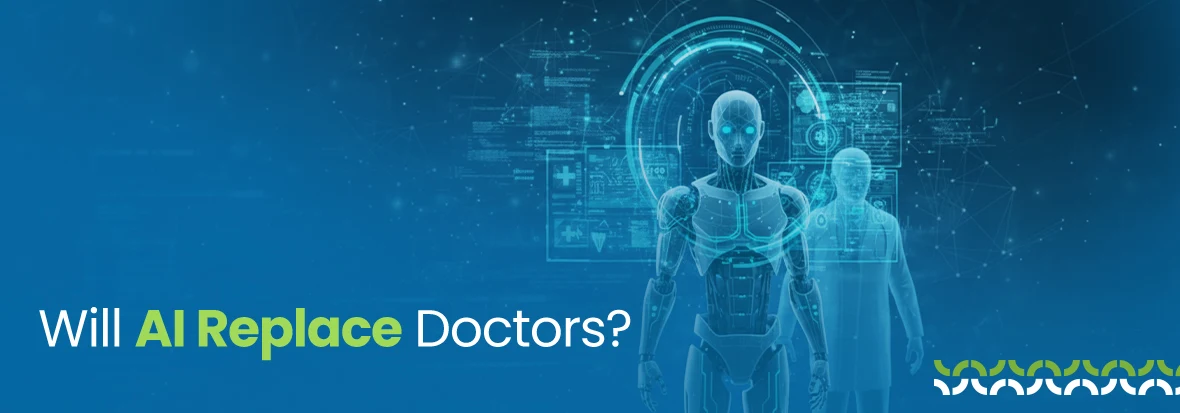
Yes, AI can absolutely handle the “pattern work and repetitive workflows.” It can scan diagnostic reports with impressively high accuracy. It can detect trends and flag patterns on X-rays or MRIs, like fractures, hemorrhages, or cancer lesions. AI can also deliver near-perfect consistency on rule-based tasks like calculating medication doses or checking drug interactions, because that’s exactly the kind of repetitive, structured work machines are built to do, fast, steady, and without fatigue.
But
Can an AI that is trained on millions of examples make a split-second drug and dose decision while you’re trying to intubate a patient who’s actively bleeding out and crashing in front of you? Can it run a full resuscitation on a no-pulse patient where the situation changes every 30 seconds, and every move depends on what happens next?
And even if it could assist with pieces of that… it still can’t do the most human part that includes the aspect of care, the nuanced, experience-driven, and emotionally informed decisions that urgent medical situations often demand.
This article answers all these questions with examples and evidence from scientific studies, regulatory reports, and ethical guidelines. Let’s discover how AI will change healthcare in the next decade and which healthcare providers should worry about AI replacement risk.
AI replacement is mostly a task question, not a doctor question
When people ask “Will AI replace doctors?”, they usually imagine a single system doing everything a physician does. That is not how the technology is landing in real hospitals. The real shift is happening at the task level. Some tasks are highly digitized and repeatable, so they are easier to automate. Other tasks are messy, human, and full of uncertainty, so they are not.
A practical way to think about “replacement risk” is task exposure. If a specialty spends a large share of its day on work that can be turned into pixels, waveforms, or structured fields, and if the output can be defined clearly (like “fracture present: yes/no” or “probability of hemorrhage”), then AI can do useful first-pass work there. If the environment is stable and the incoming data looks like what the model was trained and tested on, the system performs even better. When the environment shifts, new scanners, new protocols, different patient populations, performance can drop.
That is why the highest “AI exposure” specialties are usually the image-heavy ones. Radiology lives on scans, pathology lives on slides, and dermatology lives on visual pattern recognition at the bedside. These are exactly the domains where deep learning has shown the most mature results so far.
Which Three Medical Specialties Face the Highest Risk from AI?
According to the workflow of AI, the top three highest risk medical specialties are Pathology, Dermatology, and Radiology. Let’s begin with radiology and examine to what extent AI can realistically assume responsibilities traditionally performed by pathologists.
Radiology at Highest AI Exposure, but Not “Gone”
Radiology is one of the earliest adopters of AI. AI assistance was implemented in emergencies to help providers detect fractures with more accuracy than manual methods. According to the NIH, a meta-analysis of 26 studies on AI-assisted fracture detection found that clinicians’ sensitivity in detecting real fractures improved from 77% to 87%, and specificity for correctly ruling out fractures increased from 88% to 92%. So, when using AI, doctors’ overall diagnostic performance (AUC) increased from 0.90 to 0.95, which is considered excellent. This means doctors were less likely to miss fractures and less likely to make false alarms when AI helped them.
But this does not mean that if AI is enhancing the efficiency of providers in evaluating fractures, AI can replace radiologists, as AI can also be wrong when the fracture it is evaluating has a less common pattern that AI cannot recognize.
Dermatology
In dermatology, the story is similar: many AI systems have been trained to look at pictures of skin spots and decide whether they might be cancerous or not. A large review of published studies found that, on average, these AI tools correctly detected actual skin cancers about 87% of the time and correctly recognized non-cancerous skin spots about 77% of the time. In these controlled research settings, that performance was very close to what expert dermatologists achieved in the same tests.
In simple words AI can spot most skin cancers and avoid many false alarms at a level similar to experienced skin doctors, at least in research studies using images. But these results don’t yet fully show how good these tools are in everyday clinics with real patients.
Pathology
Similar to pathology and radiology, in pathology, high-performance algorithms can detect certain findings extremely well in controlled workflows. One famous example is the CAMELYON16 competition, where AI systems were tested on digitized microscope slides to see if they could detect tiny cancer spread (metastasis) in lymph nodes from breast cancer cases.
In that study (published in JAMA), the best AI system scored almost perfect accuracy on the main classification task (AUC 0.994). Under a time-pressured simulation, the best-performing pathologist scored 0.884. So in a “fast reading” setting, the top AI did better. But the authors also warned that this was still a competition + simulation, not a full real hospital environment. To prove real clinical value, it still needs prospective testing in real workflows, with real constraints, different scanners, different labs, different patient populations, and the full complexity of day-to-day pathology.
Outside pure imaging, “rule-heavy” safety tasks are also a natural fit for clinical decision support. Dose checks, drug–drug interaction alerts, allergy warnings, and other medication safety functions are already widely used as computerized clinical decision support, and evidence reviews link them with reductions in medication errors (while also documenting real problems like alert fatigue and unintended consequences).
But all this testing doesn’t mean AI will eliminate human doctors instead it will enhance human efficiency.
Where Automation Will Assist And Not Replace Physicians?
Three specialties with low replacement risk
No specialty is “untouched” by AI: documentation, scheduling, imaging, and decision support can appear anywhere. But if we define “replacement risk” as “AI taking over the core of the specialty,” these three are relatively resilient because the core work is embodied, relational, and situation-dependent.
Emergency medicine and critical care
Emergency medicine is the home of rapidly changing, high-stakes decisions and procedures, exactly where safe autonomy is hardest. The evidence base on AI triage emphasizes promise but also generalizability, safety, and workflow risks, which is consistent with AI being an assistant rather than a replacement.
In other words: AI can help spot patterns (e.g., risk scores, imaging flags, triage prioritization), but it cannot reliably take over the “whole room” responsibility; the leadership, hands-on procedures, and accountability when the plan must change every 30 seconds like discussed above the case of resuscitation.
Surgery
Surgery is not just decision-making; it is also fine motor skill, tactile feedback, adapting to unexpected anatomy and bleeding, and managing complications in real time. Even as autonomous capability advances, current clinical deployment remains mostly low autonomy, with continuing technical, regulatory, and ethical barriers to full autonomy.
So the realistic future is “surgeons with better tools”, automation of subtasks, planning assistance, and safety checks, rather than “surgeons replaced.”
Psychiatry and other relationship-centered care
In psychiatry (and many psychotherapy-adjacent settings), part of the “treatment” is the relationship itself; trust, empathy, alliance, and the shared understanding that drives adherence and change. A 2023 review describes the therapeutic alliance as a robust predictor of psychotherapy outcomes and emphasizes clinician interpersonal skills as a key contributor.
AI tools (including chatbots) can support access and offer structured interventions for some conditions, but a major academic review notes the evidence base is still limited, heterogeneous, and often short-term, especially for newer LLM-based systems, and highlights that long-term outcomes and high-acuity populations remain under-studied.
So the likely end-state is: AI expands capacity for screening, coaching, AI therapy notes, and between-visit support, while psychiatrists remain central for diagnosis in complex cases, risk assessment, medication management, and the uniquely human elements of care
What changes over the next decade
The next decade (roughly 2026–2036) is likely to look less like “AI replaces doctors” and more like “AI becomes a regulated, monitored layer inside clinical workflows.”
Three forces make that direction more likely than outright replacement:
First, regulation is catching up. The FDA’s public AI-enabled device list, its Good Machine Learning Practice materials, and its updated clinical decision support guidance all reflect an ecosystem pushing toward lifecycle thinking: validation, updates, transparency, and clearer categories of what is or isn’t a medical device.
Second, ethics frameworks increasingly assume human oversight as a design requirement—not an optional feature. The World Health Organization emphasizes governance, accountability, and human rights in health AI, and it has issued specific guidance on large multimodal/generative models, explicitly treating their broad capabilities as predicted rather than proven and foregrounding safety and responsibility.
Similarly, the European Union frames medical AI as “high-risk” and highlights requirements like high-quality datasets and human oversight as central obligations.
Third, professional bodies are actively steering the narrative toward augmentation. The American Medical Association explicitly uses the term “augmented intelligence” to emphasize an assistive role and stresses ethics, transparency, and responsibility in deployment.
So which providers should “worry” about replacement risk? The evidence points to a narrower answer than social media suggests: roles built mostly on repeatable pattern work will see the biggest redesign. But even there, the likely outcome is not doctor elimination—it’s a shift in what doctors do day-to-day, with more emphasis on oversight, complex judgment, patient communication, and responsibility for system-level outcomes.